Losing your hair is hard, and deciding what to do about it can feel even harder. If you've been Googling "should I get a hair transplant" at 2 a.m., you're far from alone — it's one of the most-searched men's health questions of the decade. This guide walks you through when a transplant makes sense, what to realistically expect, and a smart way to preview your future look before you commit to surgery.
Should I Get a Hair Transplant?
A hair transplant is worth considering if:
- Your hair loss has stabilized, so new grafts aren't outpaced by ongoing thinning
- You have healthy donor hair at the back or sides of your head
- Medications like finasteride or minoxidil haven't given you the results you want
- Your hair loss is affecting your confidence, career, or social life
- You're realistic about the outcome — fuller, natural-looking hair, not the hairline of a teenager
It may not be the right call if your loss is still rapidly progressing, you have an active scalp condition, or your expectations don't match what surgery can deliver. A transplant moves existing hair; it doesn't create new follicles.
When Should I Get a Hair Transplant?
Timing is everything. Most surgeons recommend waiting until your pattern of loss has become predictable, usually after age 25–30. Going too early risks an "island" of transplanted hair as surrounding native hair continues to thin around it.
Signs it might be the right time:
- Your hairline has been stable for at least 12 months
- You've tried medical treatments and know how your scalp responds
- You can commit to long-term maintenance, often continuing finasteride to protect remaining native hair
What Is the Best Age for a Hair Transplant?
The best age for a hair transplant is typically between 30 and 50. By 30, most men's loss pattern is clear, and donor hair quality is still excellent. After 50, results are still great, but donor density may be lower and healing slightly slower.
Is it better to get a hair transplant early? Not usually. Surgeons generally discourage transplants in your early 20s because future loss is unpredictable — you could end up needing repeat procedures every few years just to keep up with receding native hair. Patience almost always produces better long-term results.
Hair Transplant for a Receding Hairline
A hair transplant for a receding hairline is one of the most common and successful procedures performed today. Surgeons use FUE (follicular unit extraction) or FUT (follicular unit transplantation) to rebuild the front hairline using your own donor follicles. A skilled surgeon will design a natural, age-appropriate hairline — not a flat, juvenile one.
Typical graft counts:
- Slight recession (Norwood 2): 800–1,500 grafts
- Moderate recession (Norwood 3): 1,500–2,500 grafts
- Advanced recession (Norwood 4+): 2,500–4,000+ grafts
Hair Transplant for Thinning Hair
A hair transplant for thinning hair is trickier than treating bald patches. If you still have native hair, the surgeon must place grafts between existing follicles without damaging them. Many specialists recommend trying medication (finasteride, minoxidil, or PRP therapy) first to strengthen what you have before adding grafts on top.
Can I Get a Hair Transplant Without Shaving My Head?
Yes — "unshaven" or "U-FUE" hair transplants exist, where only the donor area, or sometimes nothing at all, is shaved. The trade-offs:
- Higher cost, often 30–50% more
- Longer procedure time
- Fewer grafts can typically be moved in one session
- Available at fewer clinics
If discretion matters and you don't want coworkers to notice, it can absolutely be worth it. For maximum graft yield in a single procedure, however, a fully shaved technique is still the gold standard.
Hair Transplant Recovery Time
Hair transplant recovery time is shorter than most people expect:
- Days 1–3: Mild swelling, tenderness, and scabbing at the donor and recipient sites
- Days 4–7: Most people return to desk work; scabs begin falling off
- Weeks 2–4: Transplanted hairs shed — this is normal, the follicles stay in place
- Months 3–4: New growth begins to appear
- Months 6–9: Visible thickening
- Months 12–18: Final result
Avoid heavy exercise, swimming, saunas, and direct sun for 2–4 weeks. Most patients are socially presentable within 10–14 days.
Hair Transplant Before and After: What to Realistically Expect
Hair transplant before and after photos can look dramatic, but average results are excellent rather than miraculous. Expect:
- 90–95% graft survival with a skilled, board-certified surgeon
- Natural-looking density, though not identical to your teenage hair
- Permanent results in the transplanted zone (donor hair is genetically resistant to balding)
- A possible touch-up session after 12–18 months for refinement
Always look at before-and-afters from the specific surgeon you're considering — not just polished clinic marketing reels.
How Often Do Hair Transplants Fail?
True failures are rare with a board-certified surgeon — under 5% of cases. "Failure" usually means:
- Poor graft survival, often due to inexperienced technicians or weak aftercare
- An unnatural hairline design
- Visible scarring, more common with FUT strip surgery than modern FUE
- Ongoing native hair loss making results look thinner over time
This is why clinic choice matters far more than country or price. Cheap transplant-tourism package deals have a meaningfully higher complication rate.
Hair Transplant Reviews: How to Read Them
When researching hair transplant reviews:
- Look for long-term reviews (12+ months post-op), not just immediate results
- Check independent forums — Reddit's r/HairTransplants is widely cited
- Be wary of clinics with only 5-star reviews and no detail
- Ask to speak with past patients directly during your consultation
Should I get a hair transplant? Reddit communities are a useful gut-check, but remember that vocal users skew toward either very happy or very unhappy outcomes. Use them for surgeon shortlists, not final decisions.
The Hair Transplant Consultation
A good hair transplant consultation should include:
- A scalp and donor-area assessment, often with a densitometer
- A discussion of your Norwood stage and likely future loss
- A graft count estimate and hairline design preview
- An honest conversation about whether you're a good candidate at all
- Itemized pricing with no pressure to book on the spot
Red flags: a "consultant" instead of the actual surgeon, same-day discount pressure, or vague answers about technique, graft counts, and who will actually perform the procedure.
Try Before You Commit: Preview Your New Hair With AI
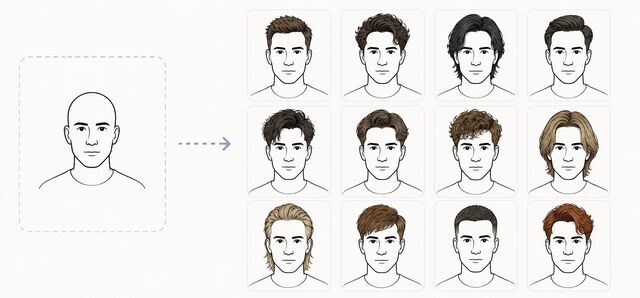
Here's the part most people skip: you can see what you'd look like with hair before spending a cent on surgery. Upload a photo and our AI instantly generates a grid of realistic previews — different hairlines, lengths, styles, and even colors — so you can:
- Decide if a fuller look genuinely suits your face shape
- Choose a hairline style to bring to your consultation
- Compare looks side-by-side before talking to a surgeon
- Show friends, your partner, or a stylist for honest feedback
It takes about 60 seconds. Most of our users say it was the single most useful step in their decision — far more concrete than scrolling through other people's before-and-afters.
Try the AI Preview — FreeFrequently Asked Questions
- Can I get a hair transplant?
- If you have stable loss and healthy donor hair, almost certainly yes. The only way to know for sure is a proper in-person consultation.
- Should I get a hair transplant in my 20s?
- Generally no — wait until your loss pattern stabilizes unless your surgeon specifically advises otherwise.
- Does a hair transplant last forever?
- The transplanted hair is permanent, but you may continue to lose native hair, so maintenance medication is often recommended.
- How much does a hair transplant cost?
- Typically $4,000–$15,000 depending on graft count, technique, and country.
- What age should I get a hair transplant?
- Most surgeons agree 30–50 is the sweet spot, with 35 often cited as ideal — old enough for stable loss, young enough for fast healing and great donor density.
The decision to get a hair transplant is personal, permanent, and worth taking seriously. Do your research, get multiple consultations, and — before you spend thousands — see what you'd actually look like with a full head of hair using our free AI preview above.